
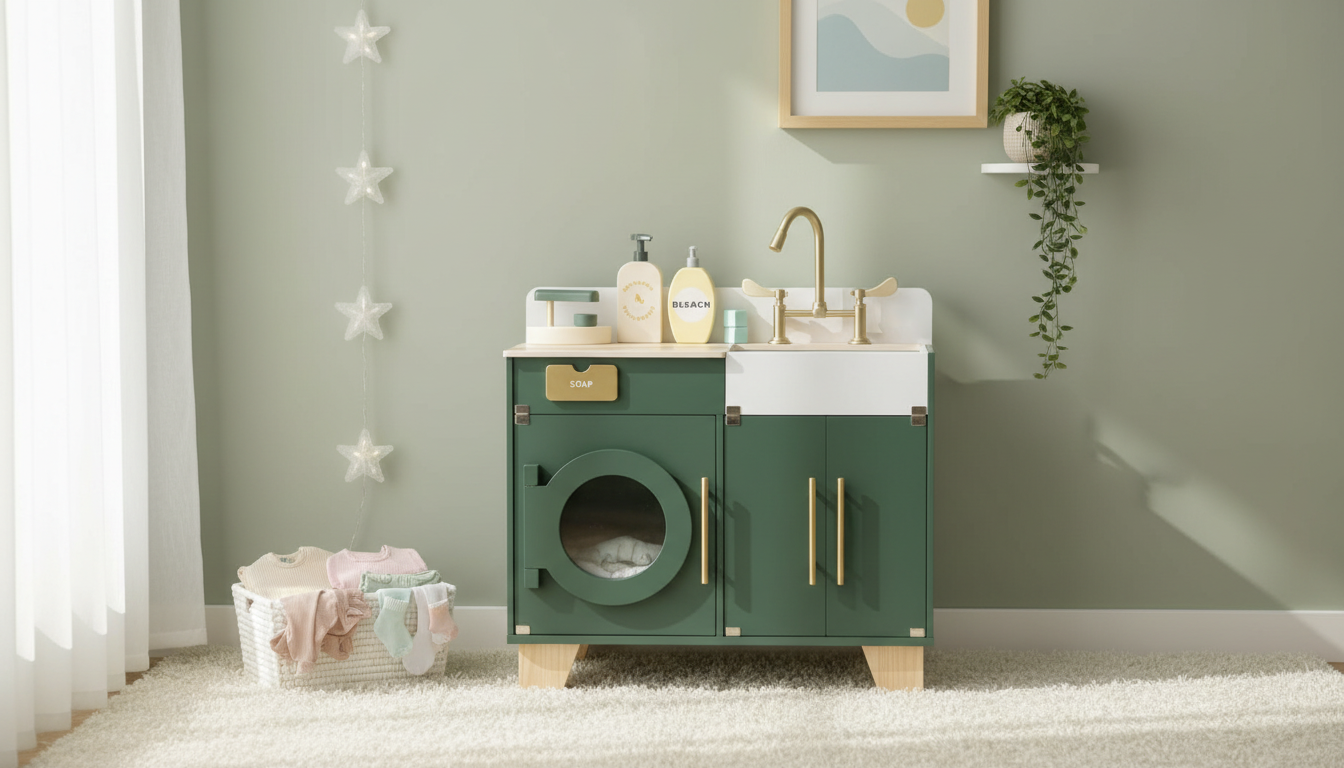
A pretend laundry corner can turn everyday routines into imaginative play. A vintage-style wooden washer and dryer set adds a classic look to a playroom while encouraging kids to “wash,” “dry,” and organize just like grown-ups. With a sturdy wood build and simple, hands-on interaction, this kind of playset supports open-ended roleplay—pair it with a toy kitchen, doll nursery, or cleaning set for a complete home-play setup. It’s also a meaningful option for families who want screen-free play that nurtures independence, language growth, and social-emotional learning through make-believe chores.
Laundry play hits a sweet spot: it’s familiar to kids, it has clear steps, and it naturally invites repetition. That combination makes it easy for children to jump into a “real-life” storyline without needing complicated instructions.
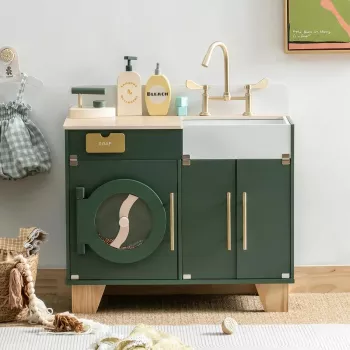
A washer-and-dryer themed unit is designed for pretend cycles, switching items between compartments, and “finishing” laundry. The vintage green styling coordinates nicely with many wooden toy kitchens and classic décor, and the simple actions—opening doors, placing items inside, and repeating the routine—make it instantly playable.
| Play feature | How kids typically use it | Skills supported |
|---|---|---|
| Washer-style compartment | Loads play clothes, starts an imagined wash cycle, checks on progress | Sequencing, vocabulary, pretend play |
| Dryer-style compartment | Transfers items from washer to dryer, “dries,” then removes items | Fine motor practice, planning, follow-through |
| Open/close actions | Practices gentle handling of doors and repeated open-close routines | Hand strength, coordination, self-control |
| Home-routine theme | Acts out cleaning day, helping caregivers, running a pretend laundry service | Social-emotional learning, confidence, cooperation |
One reason pretend laundry play lasts is that it scales with your child. The same set can support simple motor practice one day and a full storyline the next.
A laundry station can be a centerpiece or a compact add-on, depending on your space. In larger playrooms, it rounds out a home-themed corner; in smaller areas, it becomes a single “purpose station” that’s easy to reset.
Wooden pretend appliances are often chosen for durability and tactile play, but it still helps to confirm a few basics before daily use—especially if younger siblings are nearby.
For general toy-safety guidance, review resources from the U.S. Consumer Product Safety Commission (CPSC) and the ASTM F963 toy safety standard overview.
Most kids enjoy this style of pretend play from toddlerhood through early elementary years, with play becoming more story-driven as they grow. Always check the manufacturer’s age grade, and supervise younger children if small accessories are involved.
Set up a “home corner” where kids can cook, wash, and care for dolls in one continuous storyline. Doll clothes, small blankets, and soft fabric squares work well for sorting, washing, and folding routines.
Wipe wooden surfaces with a soft, slightly damp cloth and dry right away to protect the finish. Avoid harsh chemicals, and wash fabric accessories separately as needed.








Leave a comment