
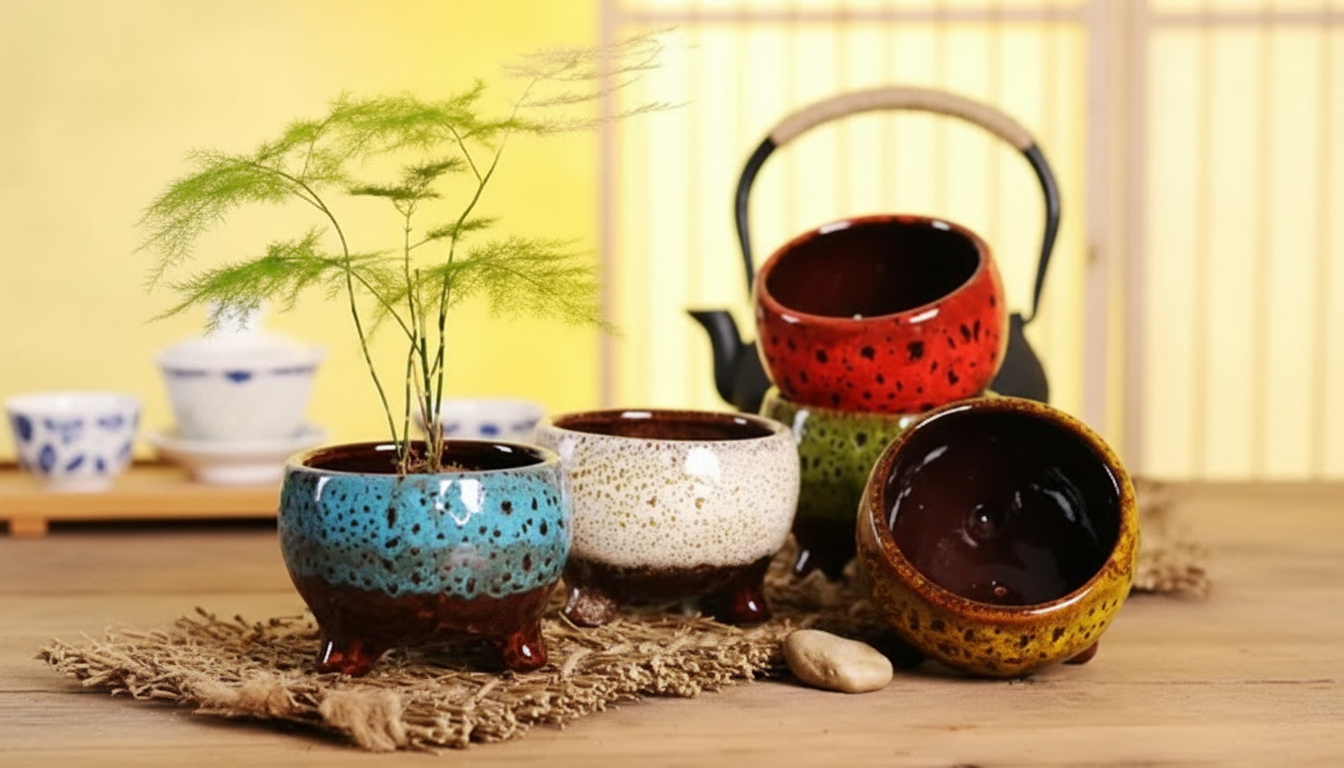
A handmade ceramic flower pot can shift a plant display from ordinary to intentional—adding weight, texture, and a calm focal point that suits both bonsai training and everyday styling. Unlike mass-produced containers, handmade pieces carry small, charming variations that make even a simple pothos cutting or a young bonsai feel curated. Below are practical ways to choose the right ceramic pot, match it to your plant and space, and keep it looking beautiful over time.
Handmade ceramic pots have a presence that’s hard to replicate with plastic or thin metal planters. They don’t just “hold a plant”—they frame it.
The “best” pot is the one that supports root health and makes the plant look proportionate. Shape matters as much as diameter, especially for bonsai where the container is part of the design.
| Pot shape | Best for | Why it works | Styling tip |
|---|---|---|---|
| Shallow round | Bonsai, moss displays | Highlights trunk and surface roots; stable base | Top-dress with akadama or fine gravel for clean lines |
| Shallow oval | Bonsai with flowing silhouettes | Enhances movement and asymmetry | Offset the tree slightly for a natural composition |
| Square/rectangular | Modern decor, formal bonsai styles | Sharp edges feel architectural and tidy | Pair with simple, solid-color glazing |
| Deeper cylinder | Herbs, small foliage plants | Extra soil volume buffers watering swings | Use a saucer to protect surfaces indoors |
A great-looking pot is only a win if it also supports healthy roots—especially for bonsai, where airflow and moisture control are everything.
For indoor plants that prefer drier conditions (like many succulents), prioritize fast-draining soil and avoid letting water sit in a saucer for long periods. For thirstier plants, deeper soil and consistent watering are more important than the container material alone.
Color and surface finish determine whether a pot blends into the background or becomes a focal point. When the pot and plant feel “in tune,” the whole space reads calmer.
If your room already has bold patterns (rugs, art, or wallpaper), a quieter glaze often looks more refined. In minimal spaces, a textured ceramic pot can add warmth without clutter. For broader container-growing tips that apply across plant types, the Royal Horticultural Society is a helpful reference point.
This Handmade Ceramic Flower Pot – Perfect for Bonsai and Decor is a compact, decor-forward piece designed to suit bonsai arrangements and everyday home styling. It’s sized for desks, shelves, windowsills, and plant stands, and it also makes a thoughtful gift for bonsai hobbyists and plant lovers who appreciate distinctive containers. For best results, pair it with a well-draining bonsai or houseplant soil mix and use a protective saucer indoors.
For small-space displays, a simple riser can help create height and separation on shelves and consoles. The 360° Rotating Wooden Phone Stand for iPhone can also work as a compact tabletop stand for lightweight decor items, helping you angle and elevate a small vignette without adding visual bulk.
Yes—bonsai typically requires drainage holes so excess water can exit quickly and oxygen can reach the roots. Use mesh screens over the holes to prevent soil loss, and add a tray or saucer indoors to protect surfaces.
Wipe the pot with a soft cloth and a mild vinegar-and-water solution, then rinse thoroughly and dry. Avoid abrasive scrubbers, and reduce future buildup by wiping drips promptly and watering in a way that minimizes splashing on the rim.
A good rule is to choose a pot that visually supports the canopy without overpowering it, with enough depth for the current root mass and training stage. Species, growth vigor, and whether you’re developing or refining the tree also influence how shallow or wide the pot should be.








Leave a comment