
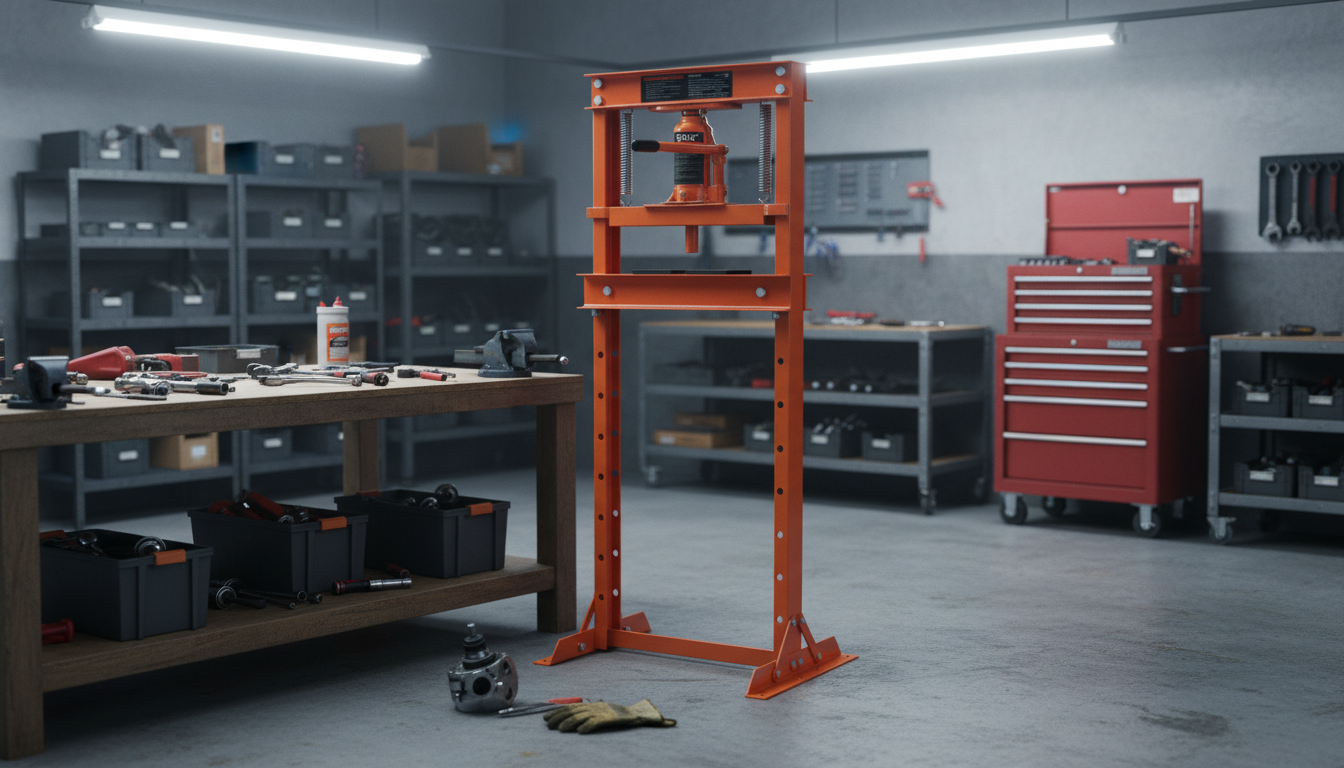
A hydraulic shop press adds controlled, repeatable force for jobs that are difficult or unsafe with hammers, pullers, or improvised clamps. A 12-ton press is a practical middle ground for most home garages and small workshops—strong enough for common bearing and bushing work while still compact enough to fit in a dedicated corner of the shop. When used with proper supports and driver tools, it helps reduce part damage, improves alignment, and makes press-fit service feel predictable instead of “all-or-nothing.”
A 12-ton hydraulic shop press covers a wide range of repair and light fabrication tasks where steady force matters more than brute impact.
Press capacity is the maximum rated force, but the “real-world” outcome depends heavily on how you support and align the workpiece. Small misalignment can waste force in friction, increase side loading, and raise the chance of a sudden slip.
For a quick refresher on how hydraulic force relates to pressure and area, see Engineering ToolBox’s overview of hydraulics basics.
Even within the same tonnage rating, usability and safety can vary a lot. These features tend to make a press easier to live with and more consistent under load.
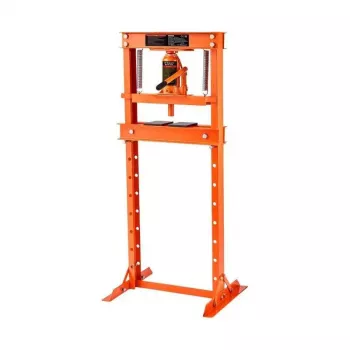
If your garage sees regular press-fit work—bearings, bushings, sleeves, and occasional straightening—the 12-Ton Heavy Duty Hydraulic Shop Press for Garage and Workshop is a practical step up from a vise-and-hammer approach. It’s especially useful when impact methods risk mushrooming a shaft, cracking a casting, or sending a slipped tool across the bay.
For best results, pair a press with quality press plates, bearing/seal driver kits, and stout support blocks sized to the job. Plan the placement on a level concrete floor and leave room on both sides so long parts (axles, control arms, shafts) don’t force awkward angles.
| Item | Details |
|---|---|
| Model | 12-Ton Heavy Duty Hydraulic Shop Press for Garage and Workshop |
| Rated force | 12 tons |
| Use cases | Bearings, bushings, sleeves, light straightening, press-fit assembly/disassembly |
| Placement | Garage/workshop floor with stable footing and clear working area |
| Price | 234.97 USD |
| Availability | In stock |
A small workflow upgrade many home shops appreciate is a stable place for a phone or tablet to display specs, torque notes, or bearing orientation photos. The 360° Rotating Wooden Phone Stand for iPhone can keep reference material visible without laying your device on a dirty bench.
If you’re marking orientation, recording measurements, or sketching a stack-up of adapters, keeping a stylus protected helps it survive the shop environment. A simple add-on like the Soft Silicone Case for Apple Pencil can improve grip and reduce damage if it gets knocked off the bench.
For broader guidance on guarding and safe operation around machinery, review OSHA’s machine guarding requirements. For eye protection basics, see NIOSH workplace eye safety.
For many passenger vehicles and light-duty repair tasks, 12 tons is commonly sufficient when the part is properly supported and aligned. Severely seized components or heavy-duty truck parts may require more capacity or different methods.
Use sturdy press plates or blocks placed symmetrically under the work, keep the load close to the press-fit area, and ensure the ram, driver, and part are square. This reduces the chance of slipping, tipping, or a sudden ejection.
Yes—within limits. A 12-ton press can handle light straightening and controlled bending when the work is properly supported and checked frequently, but thick structural pieces can exceed capacity or create unstable setups.









Leave a comment